S
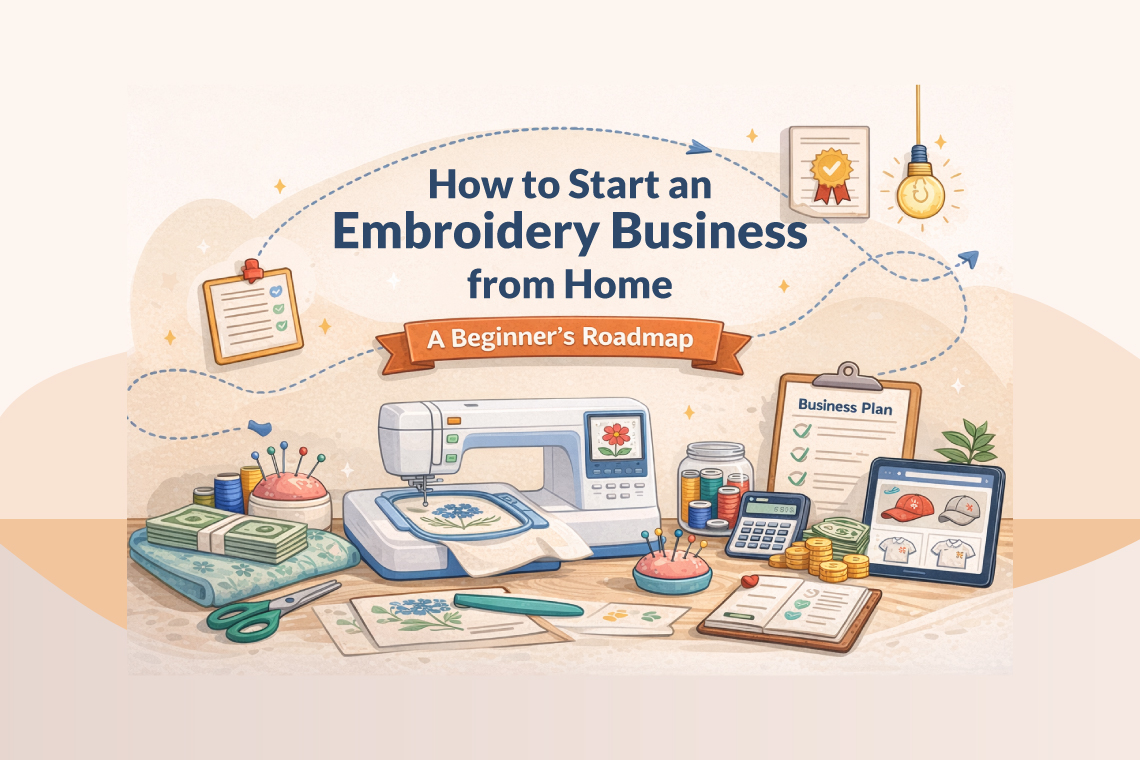
tarting your own embroidery venture no longer requires a commercial studio or massive startup capital. With smart planning, the right tools, and consistent learning, you can confidently start an embroidery business from home and grow it into a sustainable income stream.
This beginner-friendly roadmap is designed to help you move from idea to execution, covering everything from building an embroidery business plan to choosing profitable embroidery business ideas that work in today’s market.
Why Starting an Embroidery Business from Home Makes Sense
The global demand for custom and personalised products continues to rise, especially in apparel, gifts, and home décor. A home-based embroidery business allows you to:
- Keep overhead costs low
- Work on flexible schedules
- Test embroidery business ideas with minimal risk
- Scale gradually based on real demand
Many successful embroidery brands today started from a single machine at home and expanded through online channels and repeat customers.
Step 1: Build Strong Foundations With Embroidery Basics
Before focusing on sales, mastering fundamentals is critical. Understanding fabric behaviour, stabilisers, and stitch types directly impacts product quality and customer satisfaction.
If you’re still learning the technical side, Embiki’s Embroidery Basics & Guides category is a strong starting point. In particular, understanding materials is essential before accepting paid orders—this is covered in detail in How to Choose the Right Fabric for Machine Embroidery, which helps prevent common beginner mistakes like puckering or thread breaks.
Strong fundamentals increase trust, consistency, and long-term business credibility.
Step 2: Choose Profitable Embroidery Business Ideas
When you start an embroidery business from home, niche selection matters more than volume. Focusing on a clear audience helps you stand out in a competitive market.
Popular embroidery business ideas include:
- Custom logos for small businesses and uniforms
- Personalised baby items and gifts
- Embroidered caps, hoodies, and workwear
- Seasonal and holiday-themed embroidery
- Digital embroidery design files
Seasonal demand can significantly boost revenue. Ideas like holiday décor, gift items, and festive apparel are explored further in Seasonal Embroidery Ideas: Christmas, Easter & Beyond, which fits naturally with trend-based selling.
Step 3: Create a Practical Embroidery Business Plan
A clear embroidery business plan doesn’t need to be complicated—but it must be realistic.
Include:
- Target customers and niche
- Product range and pricing strategy
- Startup and monthly costs
- Marketing channels (online + offline)
- Growth milestones
If your goal is long-term scalability, this planning stage is essential. Embiki’s Embroidery Business & Trends category regularly covers market shifts and consumer behaviour that can help refine your strategy over time.
Step 4: Set Up a Professional Home Workspace
Your workspace directly affects efficiency and output quality. Even in small spaces, organisation matters.
Key setup considerations:
- Stable table and vibration-free surface
- Good lighting for stitch accuracy
- Thread, fabric, and stabiliser storage
- Noise control if sharing living space
A professional setup also reinforces trust when sharing behind-the-scenes content online.
Step 5: Use the Right Tools & Software
Reliable tools are non-negotiable when taking paid orders. Alongside a quality embroidery machine, software plays a major role in efficiency and design accuracy.
If you’re unsure which tools suit your level, Best Free & Paid Embroidery Software in 2026 (Full Guide) provides a clear breakdown of beginner-friendly and professional options—making it easier to choose software that supports growth without unnecessary expense.
This fits naturally within Embiki’s Resources & Tools category, which focuses on practical, experience-based recommendations.
Step 6: Understand Materials, Threads & Quality Control
Thread quality, fabric compatibility, and stitch density all affect the final product. Poor material choices can lead to unhappy customers—even if the design itself is strong.
Learning thread behaviour is just as important as fabric choice. A helpful reference here is Understanding Embroidery Thread Types and Their Uses, which explains when to use polyester, rayon, or cotton threads for durability and finish.
For deeper technique improvement, Embiki’s Tips & Tutorials section provides actionable guidance that improves consistency and reduces waste.
Step 7: Pricing for Profit (Not Just Sales)
One of the biggest beginner mistakes is underpricing. When you start an embroidery business from home, your pricing must reflect:
- Material and stabiliser costs
- Machine time and electricity
- Design and digitising effort
- Packaging and delivery
- Profit margin for reinvestment
Sustainable pricing supports growth and positions your brand as professional—not cheap.
Step 8: Build Brand Trust & Online Presence (EEAT Focus)
To perform well on Google and convert visitors into customers, your business must demonstrate Experience, Expertise, Authoritativeness, and Trustworthiness (EEAT).
Key actions:
- Share real project photos and process videos
- Publish helpful educational content (blogs, guides, FAQs)
- Clearly show contact details and business information
- Be transparent about turnaround times and policies
Google itself highlights the importance of trust and expertise in business content, as outlined in its Search Quality Evaluator Guidelines (Google Search Central).
Educational, helpful content also fits naturally into Embiki’s Creative Inspiration category, where ideas and examples build authority through value—not promotion.
Step 9: Marketing Your Home Embroidery Business
Effective marketing doesn’t require big budgets—just consistency and clarity.
High-performing strategies include:
- SEO-optimised blog content
- Social media showcasing finished work
- Seasonal product launches
- Collaborations with small businesses
Educational content builds long-term visibility and positions you as a trusted embroidery expert—not just a seller.
Step 10: Scale Smartly Over Time
Once demand increases, scaling should be intentional—not rushed.
Growth options:
- Adding new product categories
- Offering bulk or wholesale embroidery
- Selling digital embroidery designs
- Upgrading machines or software
Scaling works best when quality, reputation, and customer trust are already established.
Final Thoughts
If you’re ready to start an embroidery business from home, success comes from combining creativity with solid planning, technical knowledge, and trust-building content. A clear embroidery business plan, well-chosen embroidery business ideas, and continuous learning will help you grow steadily—without burning out or overspending.
Embiki exists to support that journey through practical education, tools, and inspiration—every step of the way.
Frequently Asked Questions (FAQs)
1. Can I really start an embroidery business from home?
Yes, you can absolutely start an embroidery business from home with minimal space and investment. Many successful embroidery businesses begin with a single machine, basic supplies, and online sales channels. A well-planned setup and consistent quality are more important than a large workspace.
2. How much does it cost to start an embroidery business from home?
Startup costs vary depending on your equipment and goals. On average, beginners can start with:
- An embroidery machine
- Basic embroidery software
- Threads, stabilisers, and fabrics
A small home-based embroidery business can often be launched with a modest budget and scaled gradually as demand increases.
3. Do I need an embroidery business plan to start?
Yes, creating a simple embroidery business plan is highly recommended. It helps you define your target market, pricing strategy, startup costs, and long-term goals. Even a basic plan improves decision-making and reduces financial risk.
4. What are the best embroidery business ideas for beginners?
Beginner-friendly embroidery business ideas include:
- Personalised apparel and caps
- Baby clothing and gifts
- Custom logos for local businesses
- Seasonal and holiday embroidery products
- Digital embroidery design downloads
Starting with a niche allows you to build expertise and stand out more easily.
5. Is embroidery software necessary for a home business?
Yes, embroidery software is essential for editing, resizing, and digitising designs. Beginners can start with free or entry-level software, while professional tools become valuable as your business grows and order volume increases.
6. How do I find customers for my home embroidery business?
Customers can be found through:
- Social media platforms like Instagram and Facebook
- Online marketplaces
- Your own website or blog
- Local business partnerships
Consistent content, clear branding, and customer reviews help build long-term trust.
7. What skills are most important for embroidery business success?
Key skills include:
- Fabric and thread knowledge
- Basic digitising and design understanding
- Attention to stitch quality
- Customer communication and time management
Strong fundamentals directly improve product quality and customer satisfaction.
8. Is a home embroidery business profitable?
A home embroidery business can be profitable when pricing is done correctly and quality remains consistent. Profitability increases as you refine your niche, reduce mistakes, and build repeat customers over time.
9. How long does it take to grow an embroidery business?
Growth timelines vary, but most home embroidery businesses see steady progress within the first 6–12 months. Consistent learning, marketing, and quality control are key to sustainable growth.
10. What mistakes should beginners avoid?
Common beginner mistakes include:
- Underpricing products
- Ignoring fabric and stabiliser compatibility
- Skipping test stitches
- Buying expensive equipment too early
Avoiding these helps protect your budget and reputation.