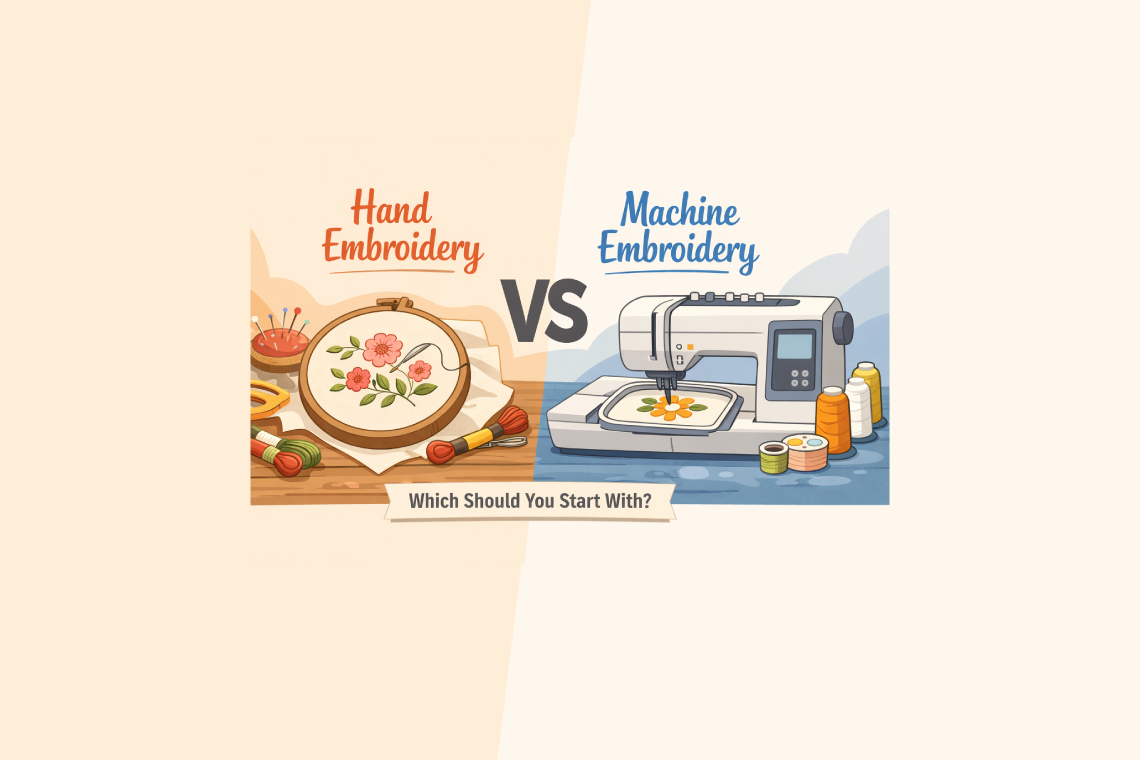
Choosing between hand embroidery vs machine embroidery is one of the first decisions beginners face when entering the world of embroidery. Both techniques offer unique benefits, creative possibilities, and learning curves. The right choice depends on your goals, time, budget, and long-term plans.
This guide breaks down the differences clearly, helping you decide the best embroidery type to learn, especially if you’re just starting out.
What Is Hand Embroidery?
Hand embroidery is the traditional art of stitching designs onto fabric using a needle and thread—entirely by hand. It has been practiced for centuries and remains popular for its simplicity and creative freedom.
Key Characteristics of Hand Embroidery
-
Requires minimal tools
-
Slow, detailed, and highly personal
-
Ideal for decorative and artistic projects
-
Easy entry point for beginners
Hand embroidery is often the first exposure to embroidery for beginners, especially for those interested in craft, mindfulness, or creative expression.
What Is Machine Embroidery?
Machine embroidery uses an embroidery machine to stitch designs automatically based on digital files. It’s widely used for commercial work, custom apparel, and repeatable designs.
Key Characteristics of Machine Embroidery
-
Faster production
-
Requires technical setup and software
-
Ideal for logos, apparel, and bulk projects
-
Consistent and scalable
Machine embroidery is commonly chosen by those planning to sell embroidered products or pursue embroidery as a business.
Hand Embroidery vs Machine Embroidery: Key Differences
| Feature | Hand Embroidery | Machine Embroidery |
|---|---|---|
| Speed | Slow | Fast |
| Tools Needed | Needle, thread, hoop | Machine, software, stabilisers |
| Skill Type | Manual & artistic | Technical & digital |
| Cost | Very low | Medium to high |
| Learning Curve | Gentle | Steeper |
| Best For | Art, relaxation, learning basics | Business, bulk work, precision |
This comparison helps beginners understand which path aligns better with their goals.
Which Is Better for Embroidery for Beginners?
For absolute beginners, hand embroidery is often easier to start with. It helps you understand:
-
Stitch structure
-
Thread tension
-
Fabric behaviour
These fundamentals apply to all embroidery types and are covered extensively in Embiki’s Embroidery Basics & Guides section.
However, beginners interested in custom apparel, logos, or faster results may prefer machine embroidery once they understand basic embroidery concepts.
Best Embroidery Type to Learn Based on Your Goals
Choose Hand Embroidery If:
-
You enjoy slow, creative crafts
-
You want minimal startup cost
-
You prefer artistic freedom
-
You’re learning embroidery fundamentals
Choose Machine Embroidery If:
-
You want speed and consistency
-
You plan to sell embroidered products
-
You enjoy working with software and machines
-
You want scalable results
Many embroiderers eventually learn both, starting with hand embroidery and transitioning to machine embroidery later.
Learning Curve: Which One Is Easier?
Hand embroidery has a gentler learning curve and fewer technical barriers. You can begin immediately with basic supplies.
Machine embroidery requires learning:
-
Embroidery digitizing basics
-
Machine operation
-
Fabric and stabiliser pairing
If you plan to explore machine embroidery later, Embiki’s Tips & Tutorials category provides step-by-step guides to help bridge that gap.
Cost Comparison for Beginners
Hand embroidery is one of the most affordable crafts to start. Machine embroidery requires a larger initial investment, including equipment and software.
Understanding costs early helps beginners choose the best embroidery type to learn without unnecessary pressure.
Can You Learn Both?
Absolutely. Many experienced embroiderers recommend starting with hand embroidery to learn the basics, then moving to machine embroidery for efficiency and scale.
Creative ideas and design inspiration can be found across Embiki’s Creative Inspiration section, which works well for both hand and machine embroidery learners.
Final Thoughts
There’s no single “correct” answer in the hand embroidery vs machine embroidery debate. The best choice depends on your goals, learning style, and interests.
If you’re new to embroidery and want to build strong fundamentals, hand embroidery is an excellent starting point. If your goal is production, precision, or business growth, machine embroidery may be the better long-term option.
Embiki’s Embroidery Business & Trends category is designed to support beginners at every stage—whichever path you choose.
Frequently Asked Questions (FAQs)
1. Is hand embroidery or machine embroidery better for beginners?
Hand embroidery is generally better for beginners because it requires fewer tools and helps build foundational skills. Machine embroidery is better once you’re ready to learn technical workflows.
2. Which embroidery type is easier to learn?
Hand embroidery has a gentler learning curve. Machine embroidery involves learning software, machine settings, and digitized designs.
3. Can beginners start with machine embroidery?
Yes, beginners can start with machine embroidery, but it’s recommended to first understand basic embroidery concepts such as stitch types and fabric behaviour.
4. Is hand embroidery cheaper than machine embroidery?
Yes. Hand embroidery requires minimal supplies, while machine embroidery involves higher upfront costs for equipment and software.
5. What is the best embroidery type to learn for business?
Machine embroidery is better suited for business because it allows faster production, consistency, and scalability.
6. Do professional embroiderers still use hand embroidery?
Yes. Hand embroidery is widely used in art embroidery, fashion detailing, and custom decorative work.
7. Can I combine hand and machine embroidery in one project?
Yes. Many advanced projects combine both techniques—machine embroidery for structure and hand embroidery for fine details.
8. How long does it take to learn embroidery?
Basic hand embroidery can be learned within days. Machine embroidery usually takes several weeks of practice to become comfortable.