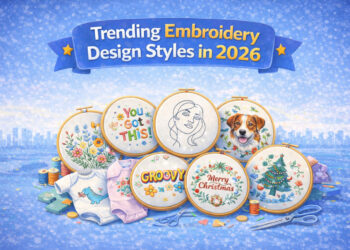
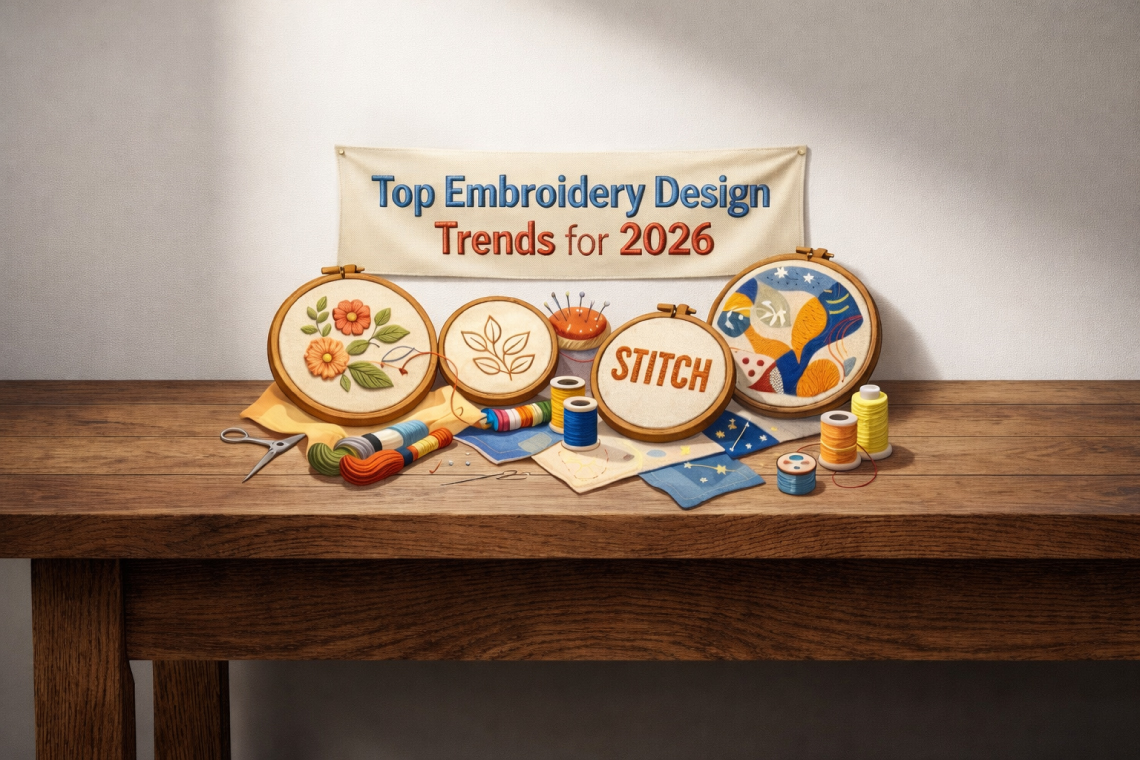
Embroidery continues to evolve as both a creative craft and a commercial art form. In 2026, embroidery design trends are being shaped by modern aesthetics, sustainability, and advances in materials and machines. Whether you’re exploring embroidery for beginners or refining your design style, staying updated with current trends helps your work feel fresh, relevant, and market-ready.
This guide explores the top embroidery design trends for 2026, focusing on big-picture movements that are influencing both hand embroidery and machine embroidery worldwide.
Why Embroidery Trends Matter in 2026
People actively search for embroidery trends to stay current, improve design appeal, and align their work with modern tastes. Trends influence what customers buy, what performs well online, and which designs feel contemporary rather than outdated.
Understanding trends doesn’t mean copying them—it means adapting ideas creatively to your own embroidery style.
Textured & Dimensional Embroidery
Texture is one of the strongest embroidery trends for 2026. Designers are moving beyond flat stitch patterns and embracing depth, layering, and raised effects.
Popular techniques include:
-
Puffy satin stitches
-
Layered fill stitches
-
Couching with thicker threads
-
Trapunto-inspired padding
These textured styles work beautifully for floral motifs, abstract designs, and statement lettering. You’ll often see these techniques explored in modern embroidery stitch techniques used in contemporary designs.
Modern Minimalism with Clean Lines
Minimalist embroidery continues to grow in popularity, especially among beginners and modern brands. In 2026, minimalism focuses on intentional simplicity rather than empty design.
Key characteristics include:
-
Clean outlines
-
Limited colour palettes
-
Negative space
-
Fine line stitching
Minimalist embroidery works exceptionally well for logos, clothing labels, tote bags, and wall art. This approach is especially popular among those learning machine embroidery basics.
Bold Typography & Statement Lettering
Typography-driven embroidery is becoming more expressive in 2026. Instead of small decorative text, designers are using large, bold lettering as the focal point of embroidery designs.
Trending styles include:
-
Sans-serif fonts
-
Handwritten lettering
-
Retro-inspired typography
-
Text combined with abstract shapes
Stitch direction and density play a major role in making embroidered text look clean and professional. Studying professionally digitized embroidery patterns can help beginners understand how lettering is structured for machine stitching.
Glow Threads & Specialty Materials
Innovative materials are shaping embroidery design trends in 2026. Glow-in-the-dark threads, metallic finishes, and reflective yarns are becoming more accessible and more widely used.
Why this trend stands out:
-
Adds visual interest in low-light conditions
-
Creates novelty and interactive designs
-
Works well for accessories, kids’ items, and event wear
Choosing the right materials becomes easier with a solid embroidery tools and materials reference.
Sustainability-Inspired Embroidery Designs
Sustainability continues to influence embroidery themes and aesthetics. In 2026, embroidery designs increasingly reflect environmental awareness and a connection to nature.
Common themes include:
-
Botanical illustrations
-
Wildlife motifs
-
Earth-tone colour palettes
-
Organic textures and imperfect stitching
Designers are prioritising long-lasting styles that feel timeless rather than trend-driven.
Modern Abstract & Artistic Motifs
Abstract embroidery is gaining popularity as a form of creative expression. Instead of realism, these designs focus on shapes, movement, and colour flow.
Trends include:
-
Asymmetrical layouts
-
Geometric forms
-
Free-flow stitch directions
-
Layered textures
Many of these ideas originate from evolving modern embroidery inspiration sources.
Mixed Media & Cross-Technique Embroidery
Mixed media embroidery is one of the most creative trends for 2026. This style blends embroidery with other techniques for added depth and originality.
Examples include:
-
Embroidery over printed fabric
-
Stitching combined with fabric paint
-
Hand embroidery layered onto machine-stitched bases
-
Beads, cords, and appliqué elements
Step-by-step experimentation with these styles is often covered in advanced embroidery design tips.
How Beginners Can Use 2026 Embroidery Trends
If you’re new to embroidery, you don’t need to follow every trend at once. Start by choosing one trend that matches your skill level, practicing on small projects, and testing stitches before committing to larger designs.
This learning-first approach aligns well with Embiki’s Tips & Tutorials for beginners.
Final Thoughts
The embroidery design trends of 2026 reflect a balance between creativity, simplicity, and innovation. From textured stitching and bold typography to sustainable themes and mixed media techniques, embroidery continues to evolve while staying rooted in craftsmanship.
Understanding these trends helps you create designs that feel current, expressive, and purposeful—and this awareness is also valuable when exploring embroidery market trends.
Explore more foundational techniques and creative guidance in Embiki’s Embroidery Basics & Guides, where learning meets inspiration.
Frequently Asked Questions (FAQs)
1. What are the biggest embroidery design trends for 2026?
The biggest embroidery trends for 2026 include textured and dimensional stitching, modern minimalism, bold typography, sustainability-inspired designs, glow and specialty threads, abstract motifs, and mixed media embroidery techniques.
2. Are embroidery trends important for beginners?
Yes. Understanding embroidery trends helps beginners learn which styles are popular, market-relevant, and easier to practice. Trends like minimalism and bold lettering are especially suitable for those just starting out.
3. Do embroidery trends apply to both hand and machine embroidery?
Most embroidery trends apply to both hand embroidery and machine embroidery. However, some trends—such as specialty threads and bold typography—are more commonly seen in machine embroidery projects.
4. Is it necessary to follow embroidery trends?
No. Trends are a source of inspiration, not rules. Many embroiderers use trends as a creative guide while still maintaining their own personal or brand style.
5. What embroidery trend is best for learning fundamentals?
Modern minimalist embroidery is one of the best trends for learning fundamentals. It helps beginners focus on stitch control, spacing, and fabric behaviour without complex design elements.
6. Are sustainable embroidery designs a long-term trend?
Yes. Sustainability-focused embroidery designs are considered a long-term trend, influenced by environmental awareness and consumer demand for timeless, eco-conscious products.
7. Can embroidery trends help with selling products?
Yes. Staying aware of embroidery trends can help creators design products that appeal to current market preferences, especially for apparel, gifts, and home décor items.